A Candy Cat Illustration for Festive Design Projects
When a Client Request Calls for Sweet, Seasonal Charm
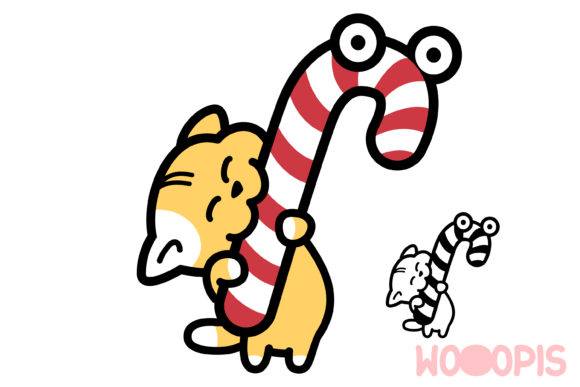
You’ve just received a brief from a client for their holiday campaign. It’s a small boutique specializing in handmade gifts, aiming to launch a limited-edition Christmas collection. The mood board they’ve shared leans toward whimsical, nostalgic, and cozy—not stark minimalism. As you scan your design assets for something to anchor this visual direction, you evaluate Christmas Candy Cat for Cut and Print. This isn’t about a basic product description; it’s a practical review from a designer who needs to know if this graphic file will elevate real client work.
The First Impression: Whimsy with a Touch of Tradition
Upon opening the file, the illustration immediately establishes a mood. It’s playful, infused with a holiday spirit that feels both classic and approachable. The style leans toward decorative illustration, not flat geometric abstraction. This isn’t an asset for a tech startup’s corporate report. Instead, it naturally fits projects for handmade businesses, Etsy shops, boutique product lines, and seasonal campaigns targeting families, crafters, or anyone seeking warmth in their visual communication.
Where This Candy Cat Graphic Shines in Practical Application
In real design situations, Christmas Candy Cat for Cut and Print performs as a versatile creative design asset. For product labels and packaging design on small-batch holiday candles or cookie boxes, it provides a central decorative element. As a hero graphic for a local event’s poster or flyer, it creates an inviting focal point. Its nature makes it ideal for social media graphics, particularly Instagram posts and Pinterest pins aimed at engaging a community around festive activities.
Given its description as a file for cutting machines, its core strength lies in tangible applications. For Cricut projects, it translates seamlessly into sticker designs, vinyl decals for pillows or bags, and elements for t-shirt design or tote bags. In print-on-demand contexts, it can become the artwork for mugs, printable wall art, or sublimation design. For digital sellers, it can be incorporated into Canva templates for craft bloggers or into digital design assets for a holiday design bundle.
Best Fit: Large Areas and Decorative Accents
This illustration works best when given space to breathe. Use it in large layout areas, as a primary visual in product mockups, or as a bold decorative accent on invitations or merchandise. It excels in building themed collections—pairing it with complementary typography and patterns for a cohesive campaign visual. For packaging details or website graphics aiming for high emotional appeal, it can serve as a key supporting brand element for a seasonal identity.
Caution Required: Small Sizes and Clean Hierarchies
There are scenarios where Christmas Candy Cat for Cut and Print should be used carefully. In very small sizes, its intricate details may become lost or muddy, impacting visual trust and readability. Avoid placing it on complex backgrounds or in crowded layouts where it fights for attention. For projects requiring very clean visual hierarchy or minimalist branding, this asset might introduce too much ornamentation. It is generally unsuitable for professional corporate materials like annual reports or formal business communications.
Impact on Brand Consistency and Audience Engagement
Incorporating this graphic into a project affects several critical design outcomes. Its strong emotional appeal can boost audience engagement, especially for target demographics like crafters and families. It can enhance the overall impression of a design project, making it feel more polished and purposefully festive. However, for year-round brand identity, it should likely be used as a seasonal accent, not a permanent logo design component, to maintain brand consistency. Its recognizability becomes a strength for short-term campaigns or product launches.
Practical Designer Notes Before Client Delivery
Before committing this asset to a paid client project, run these checks. First, test it in black and white to ensure its forms hold without color. Check contrast on both light and dark backgrounds you intend to use. Preview it at small and large sizes to confirm detail retention. If possible, place it on real mockups—a t-shirt template, a mug, a packaging box—to assess real-world fit.
For print applications, test print quality at the intended scale. Review the provided file formats; if an SVG design is included, inspect its vector editability for minor customizations. If it’s a PNG design, confirm the transparency is clean. Compare the illustration alongside different font styles—a serif font for tradition, a sans serif for a cleaner mix, a script font for extra whimsy—to see which pairing strengthens the visual hierarchy.
Most critically, confirm the commercial licensing terms. Ensure that using Christmas Candy Cat for Cut and Print for your client’s small business branding, marketing visuals, or Etsy product is permitted under the license. Never assume.
A Final Word on This Festive Design Asset
Christmas Candy Cat for Cut and Print is a specific tool in the graphic design asset toolbox. It won’t fit every project, but for the right one—a client seeking warmth, nostalgia, and handmade charm for their holiday offerings—it can be invaluable. It provides a ready-made centerpiece that, when applied thoughtfully, improves the visual mood and helps the final result feel cohesive, engaging, and professionally executed. As with any illustration from a creative marketplace, its value is realized not just in its aesthetic, but in its practical performance under the demands of real commercial design.